Dawn Health
I helped a global dental tech company define their first consumer product.
I led a cross-functional team through an 8 week strategic discovery process that turned extensive research and too many directions into one validated app concept that brought the client’s scan technology to patients for the first time.
2025
8 weeks
Lead Product Designer
Product strategy
UX
Stakeholder management
The problem
Our client wanted to build their first patient-facing app. Their goals: support new diagnostics capabilities, drive scanner usage, & strengthen dentists and patients communication.
They needed a clear direction on what to build before a major conference deadline.
The solution
Through Dawn's Discovery process we landed on a concept that connected 3Shape's core strength to an unmet patient need:
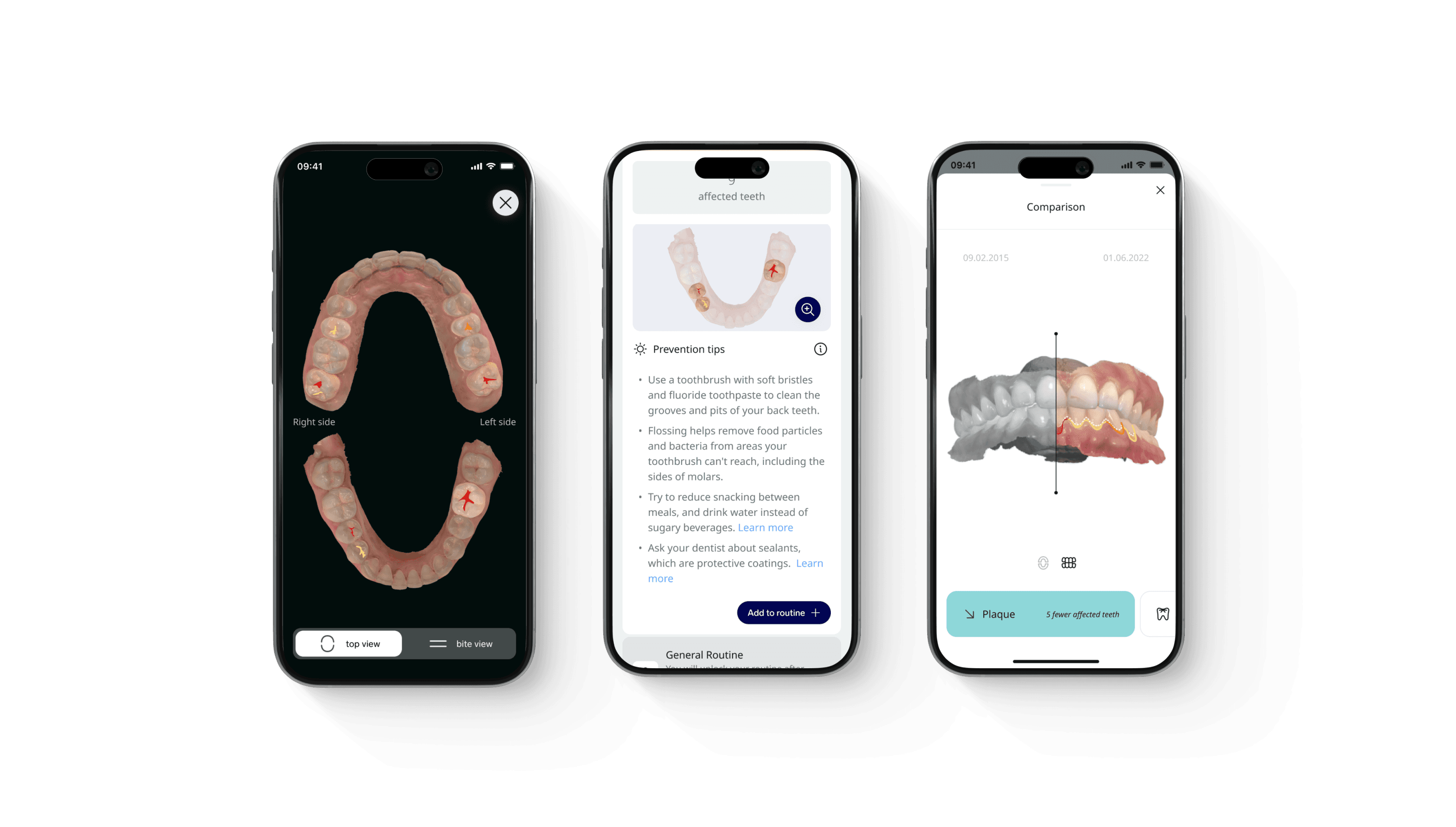
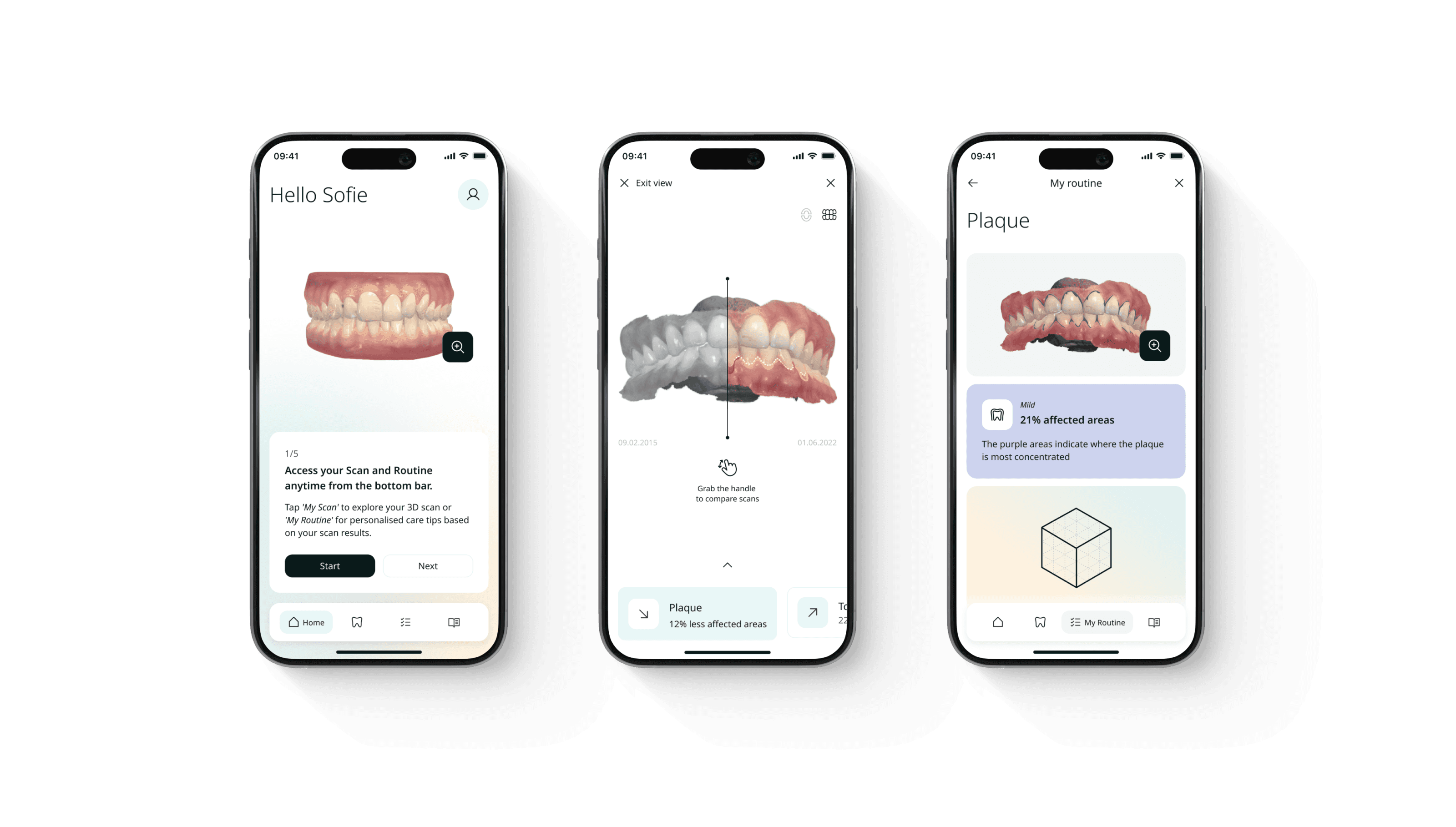
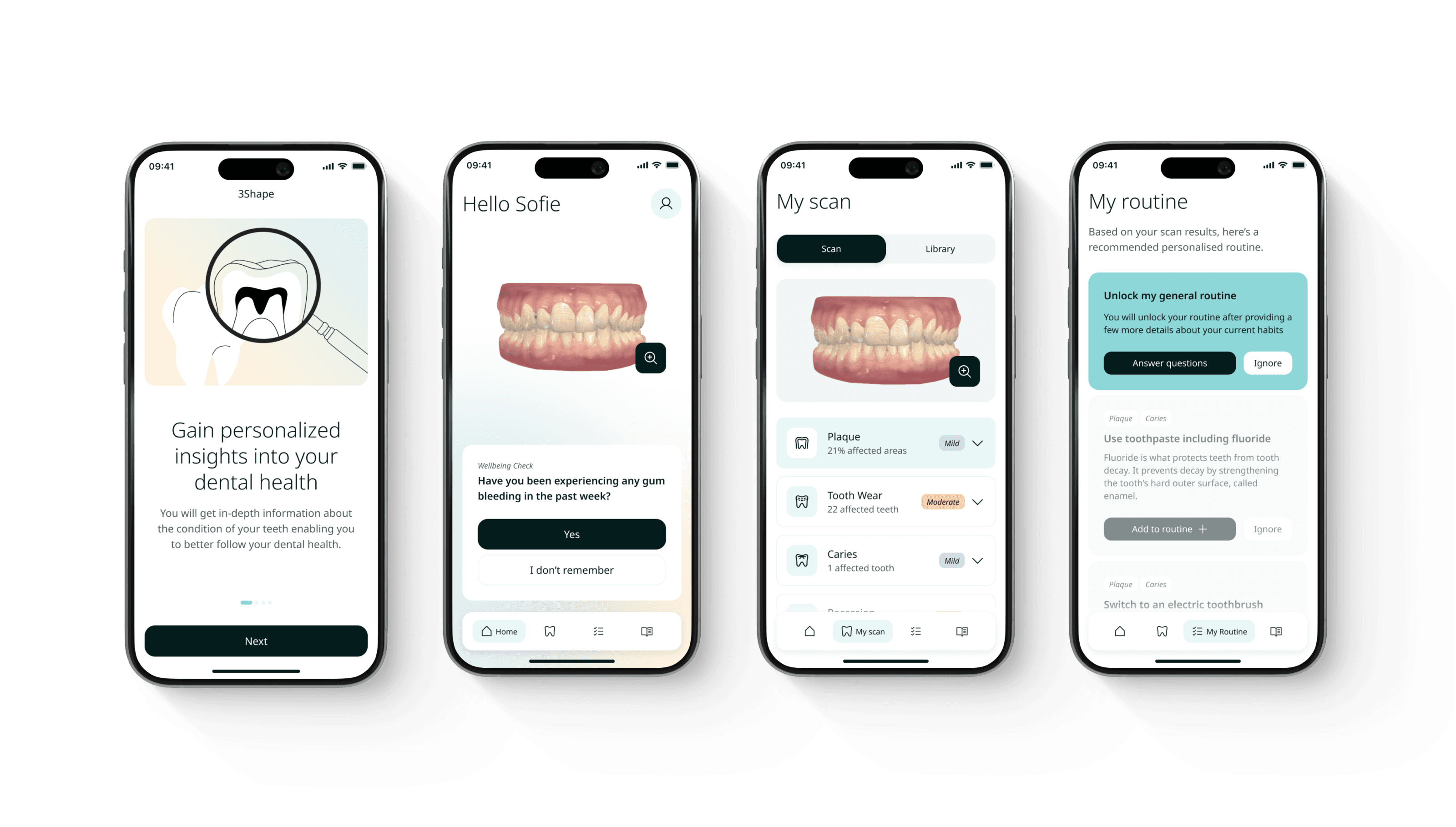
A patient-facing app anchored in our client's 3D scan technology, translating what dentists see in clinical diagnostics into something patients can actually understand and act on.
Personalized care plans, visual health insights, and scan-based progress tracking, all rooted in data from the clinic, now made accessible in the patient's pocket.
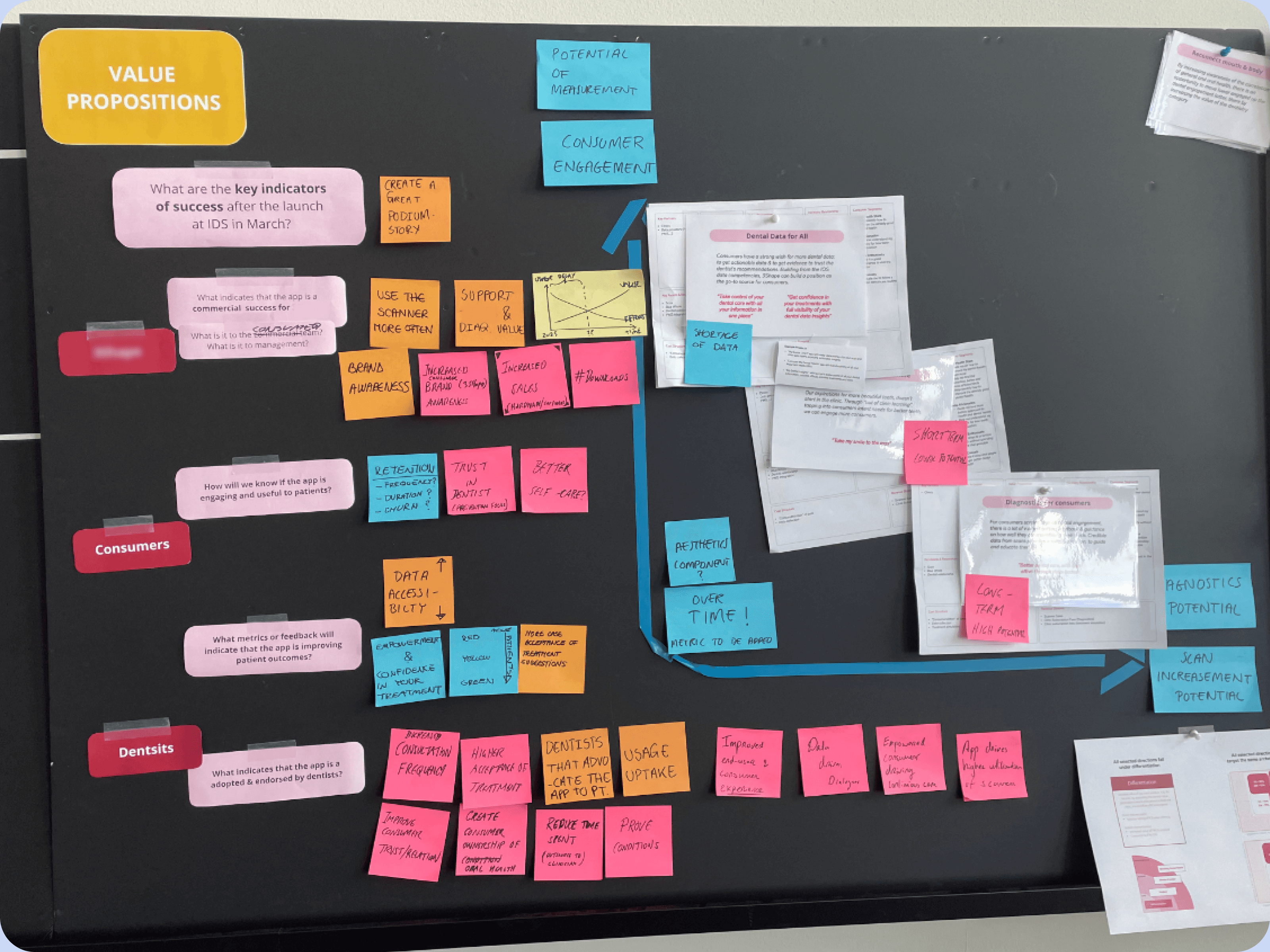
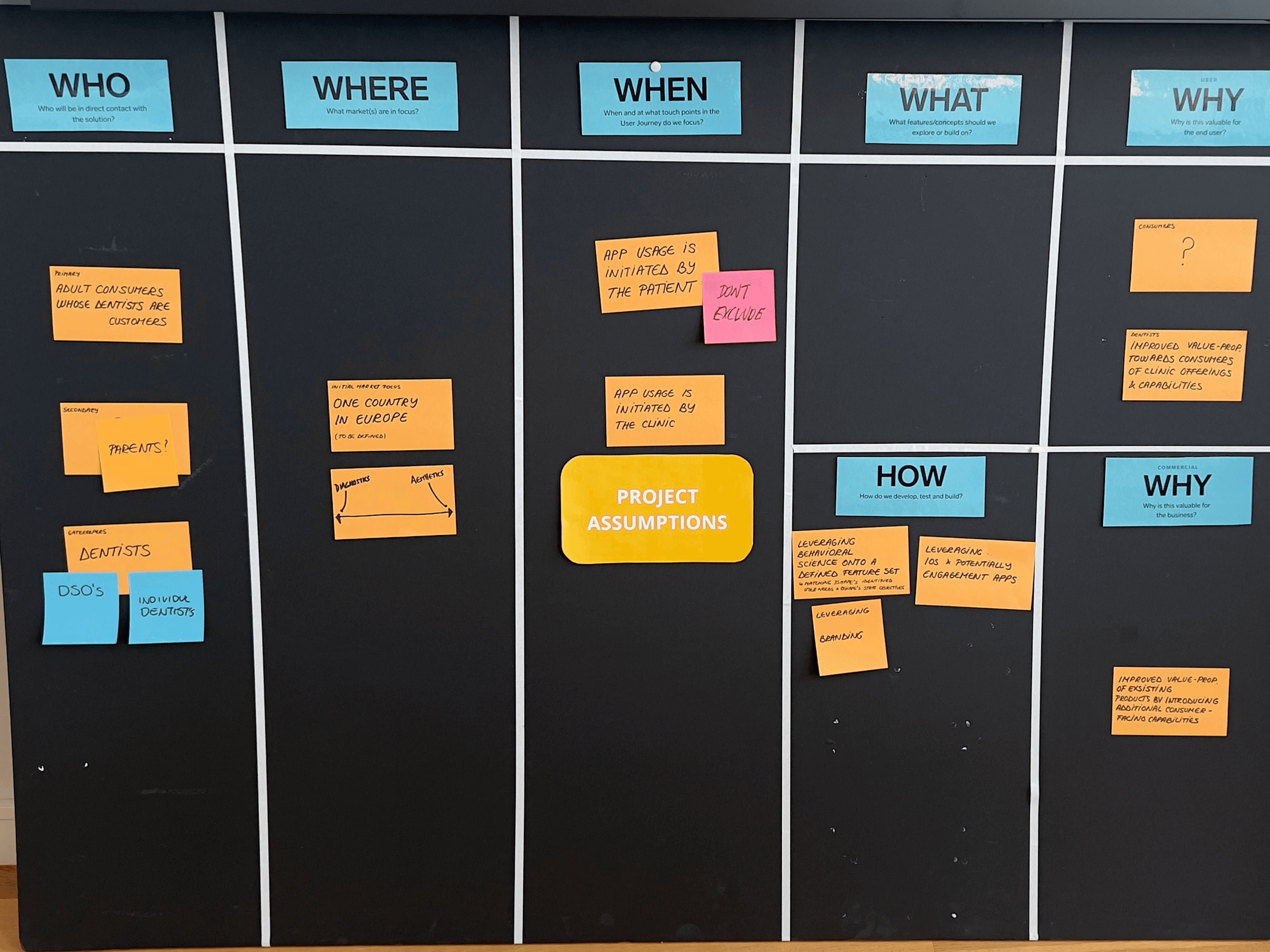
Workshop 1: Defined the strategic foundation for exploring product directions.
01.
Discussion: What does success look like after the IDS conference from three angles: business, consumer, dentists.
Result: Clear V1 goals including a compelling product story for the IDS conference that demonstrates value to all three audiences.
02.
Exercise: Map their eight initial value props against consumer engagement and diagnostics potential.
Result: Narrowed down to four value props. that mapped to the desired outcomes.
03.
Exercise: Connect the remaining value props. to the user personas: adding behaviors, barriers, and jobs to be done.
Result: Aligned understanding of which value props. were viable, who each one served, and how they mapped back to the success criteria.
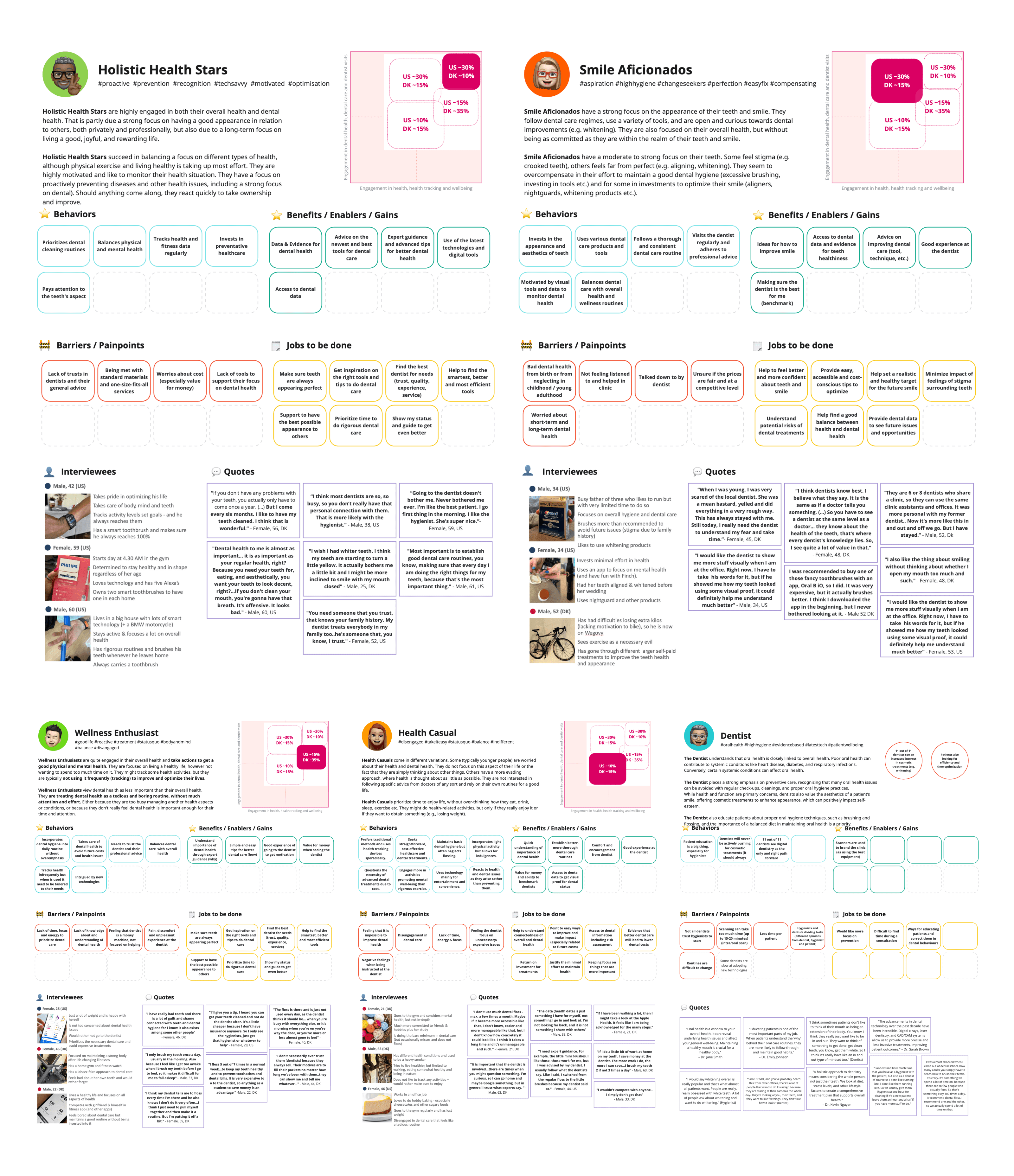
Workshop 2: One opportunity space anchored in the client’s core diagnostics technology, with a clear hypothesis, defined target behaviors and commercial grounding, ready to move into product definition.
01.
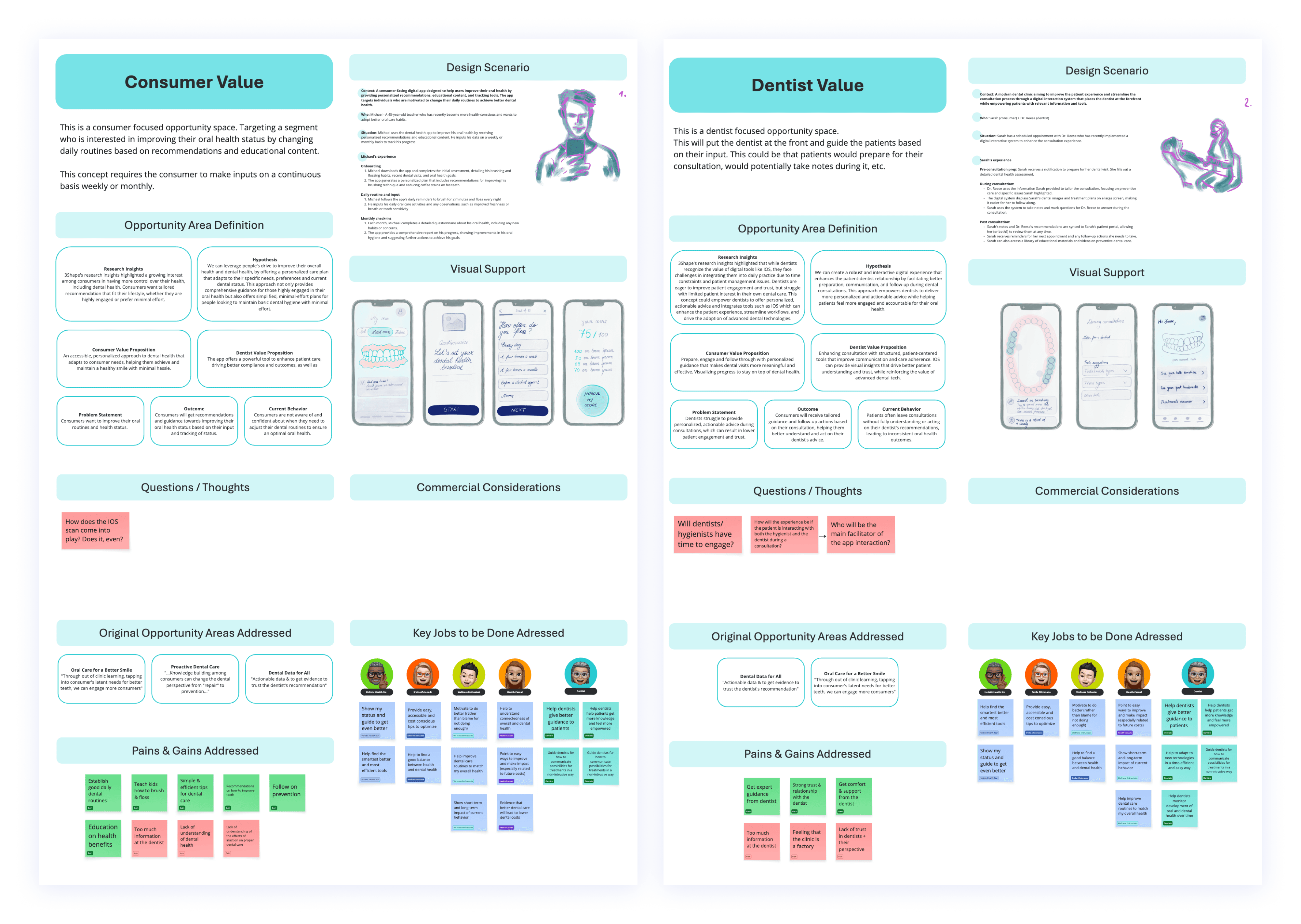
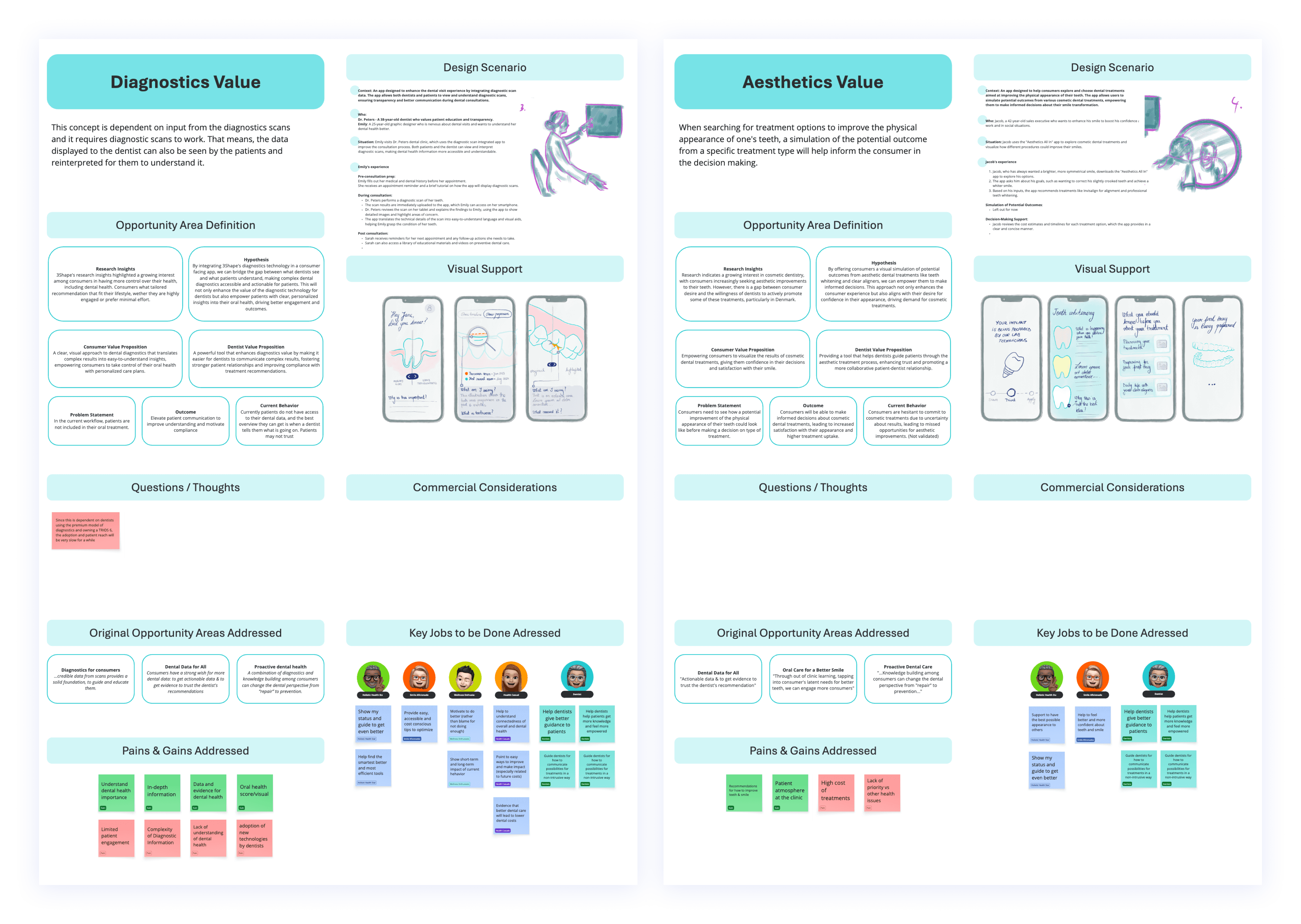
Pre-workshop ideation: Informed by the strategy, we developed four product directions, each with a research-backed hypothesis, value propositions for both consumers and dentists, target behaviors, and a design scenario.
Result: The four directions: Consumer value, dentist value, diagnostics value, aesthetics value.
02.
Discussion: On presenting the four directions, the client challenged assumptions, added commercial considerations and voted on the elements they found strongest across all four.
Result: The team concluded that the strongest concept would be merging the Consumer Value and Diagnostics Value, with the scan technology as the core value driver.

From high level direction to structure
Result: A clear product architecture , anchored in the scan as the entry point, everything from insights to care plans supporting that core interaction.
With the opportunity space defined, I started mapping the end-to-end journey: how a patient goes from a clinic scan to downloading the app, seeing their results, and building a care routine around it.
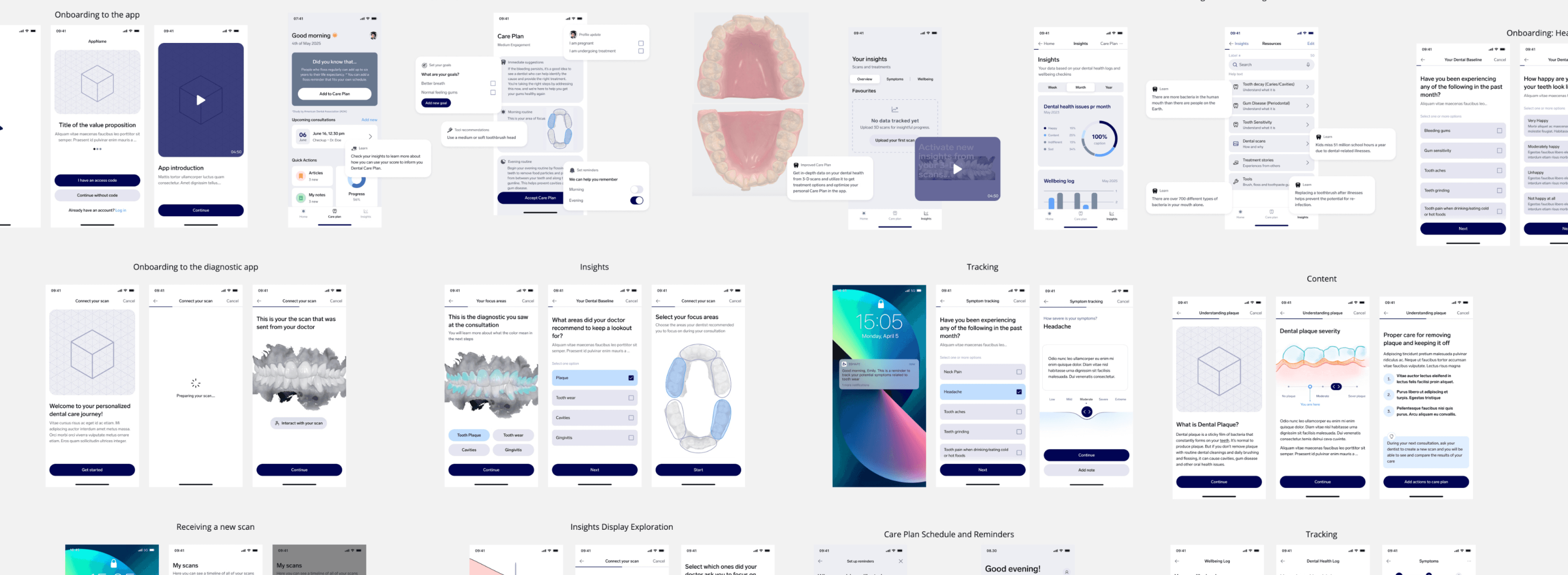
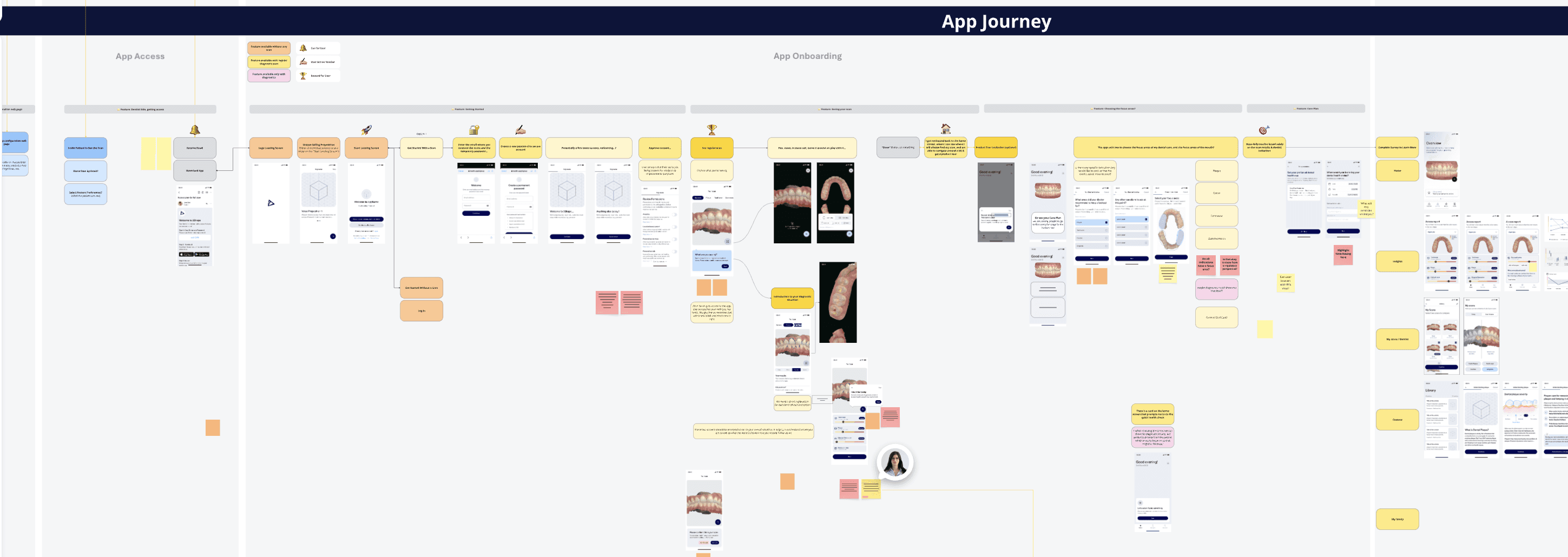
From structure, to validation and detail.
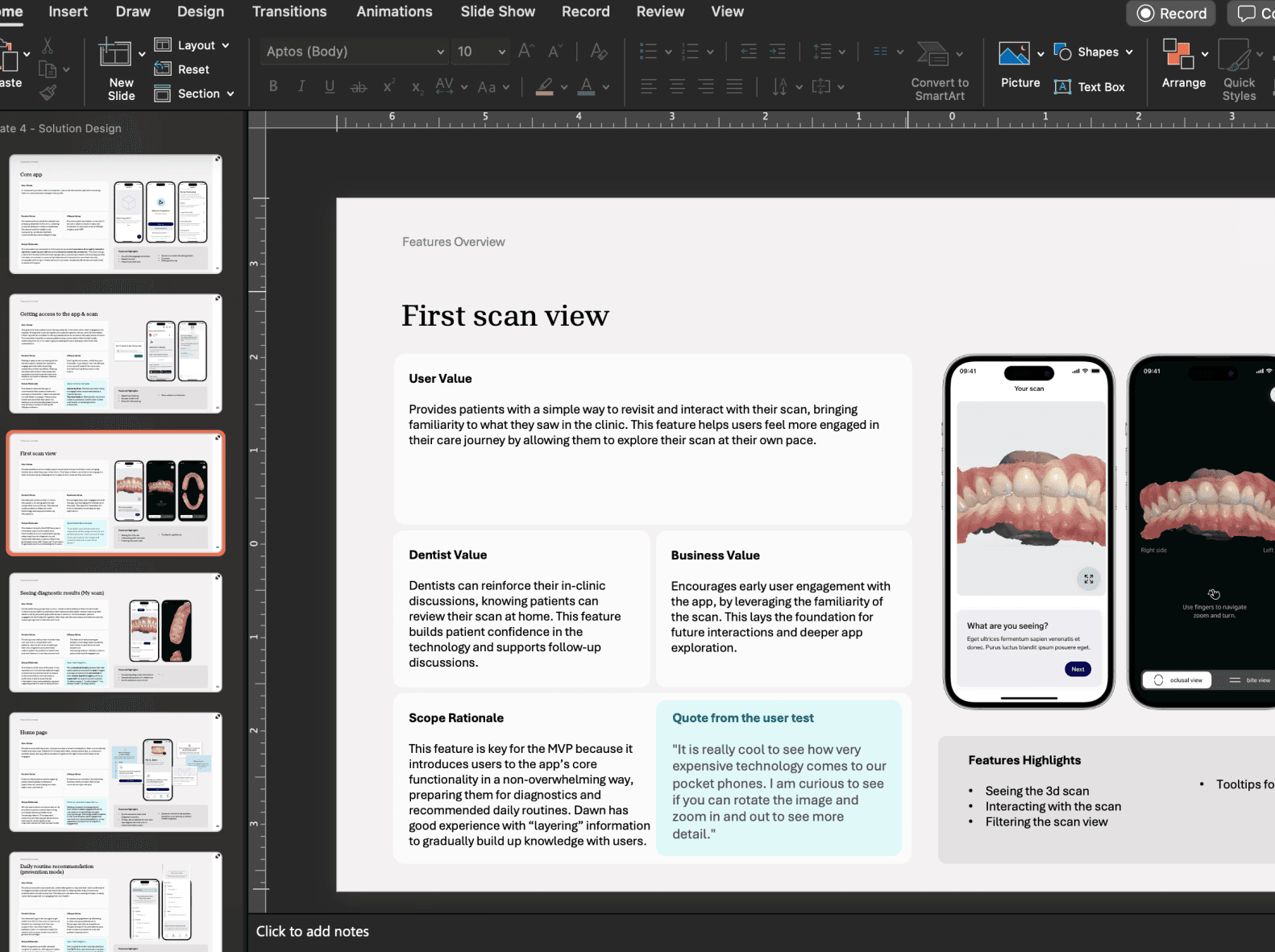
I designed the UX of key screens, and defined feature scope against user needs, business value and behavioral considerations. What drives engagement? What causes fatigue? What's essential for V1 vs what can wait?
Validation insights fed back into the product direction and I iterated the concept based on the results. Meanwhile, the UI designer applied the visual direction to the flows and screens I'd defined.
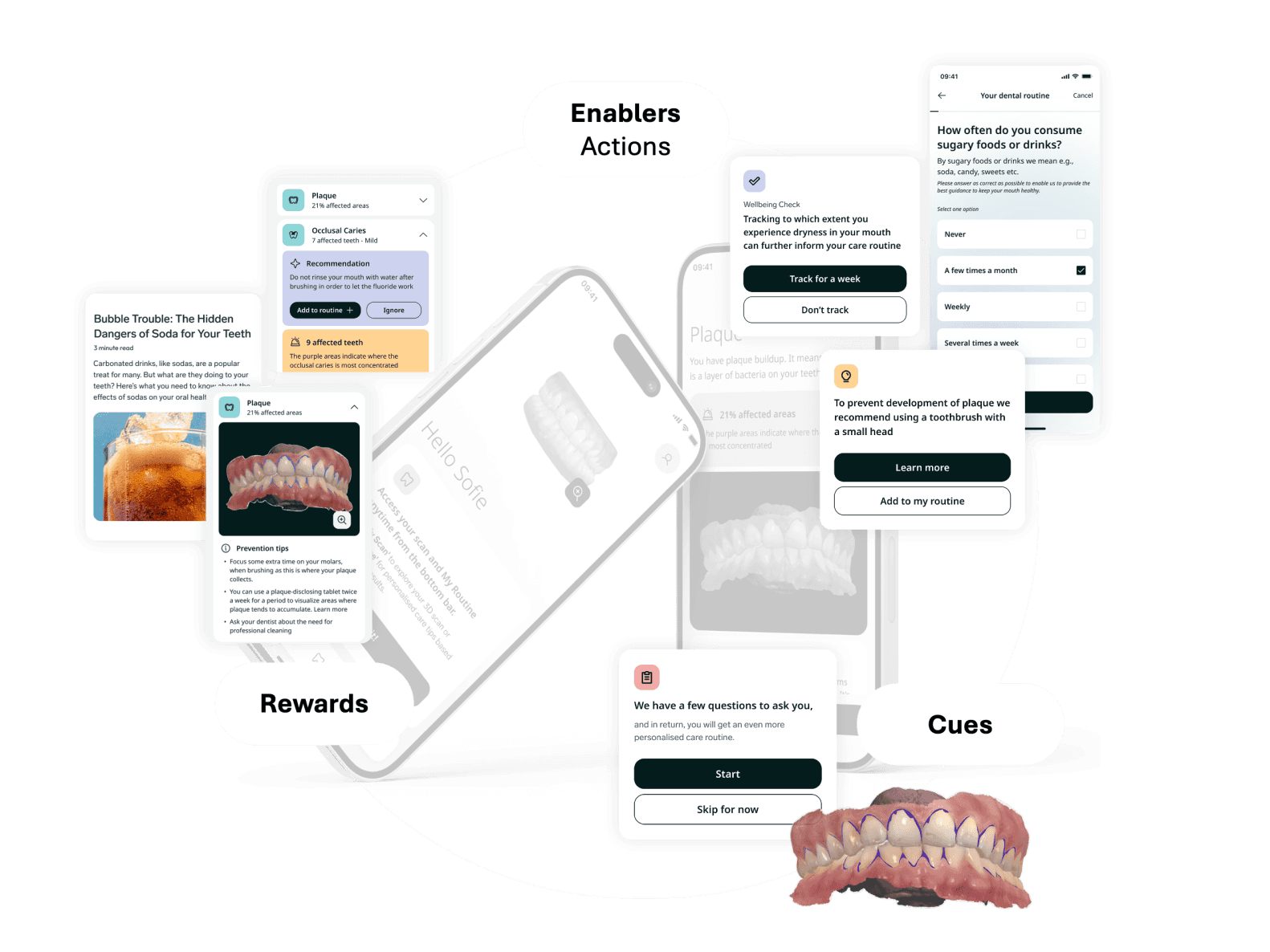
Result: A prioritized feature set with the scan visualization and personalized care plans as the core experience, diagnostic reports as a trust builder, and a deliberate decision to deprioritize reminders and goal-setting based on validation data showing fatigue risks.
The impact
The discovery provided our client everything they needed to get buy-in from their leadership team to initiate app development.
A fully defined product direction with a strategic grounding, a scoped V1 feature set, and aligned stakeholders across product, commercial, and leadership.
The client chose to pursue development with another vendor due to contractual misalignments, but the product they shipped followed the direction we defined and validated together in the discovery.